Things I did in 2026!
This year I did a lot of different things, which will come together next year cohesively ;)
The first thing was figuring out how morphogenesis works, which culminated in presenting to MIT professors on a plant which grows cigarettes natively. This was a ridiculous and fun project and part of my short course in biology (HTGAA). It sounds stupid but it is actually quite reasonable - figuring out the Biology Millenium problem of "how does morphogenesis work?" is well approached when you consider first growing primitive 3D shapes like cylinders, and how you might program a cell factory to grow into those specific shapes. Why did I do this? I found bio to be super fertile ground. I feel like software is a bit mature now and always being curious to learn, I liked exploring bio a LOT.
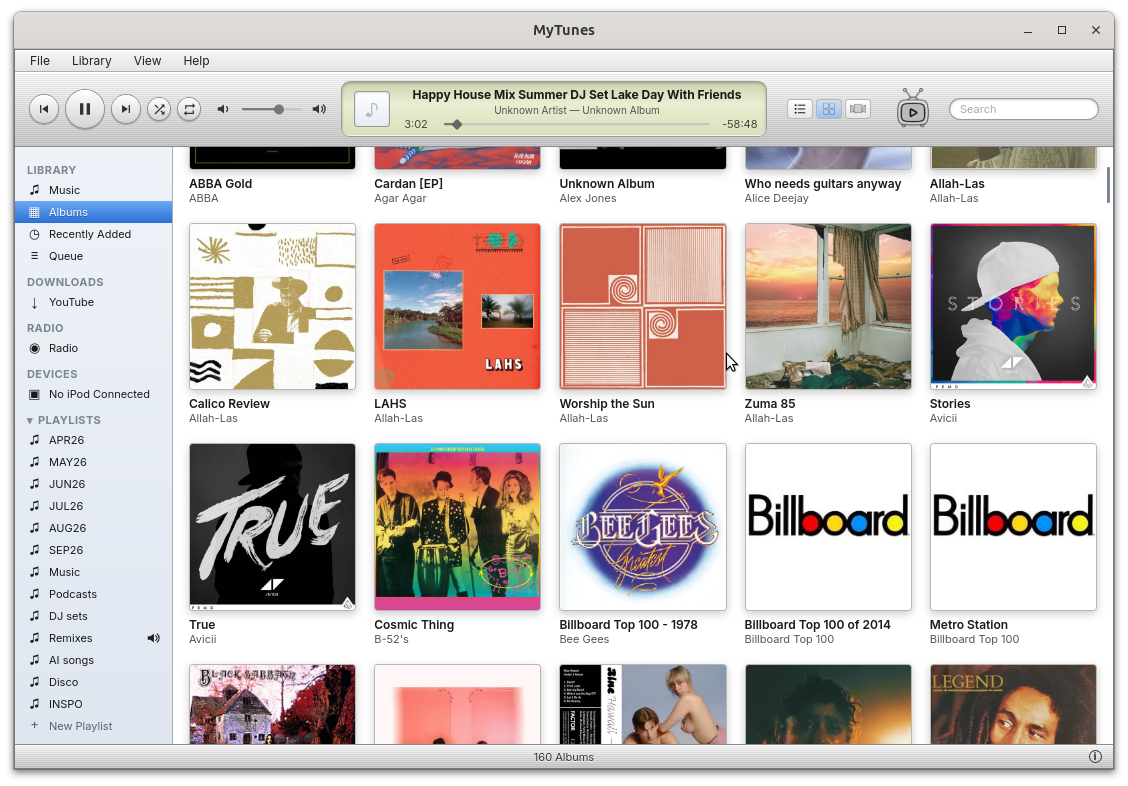
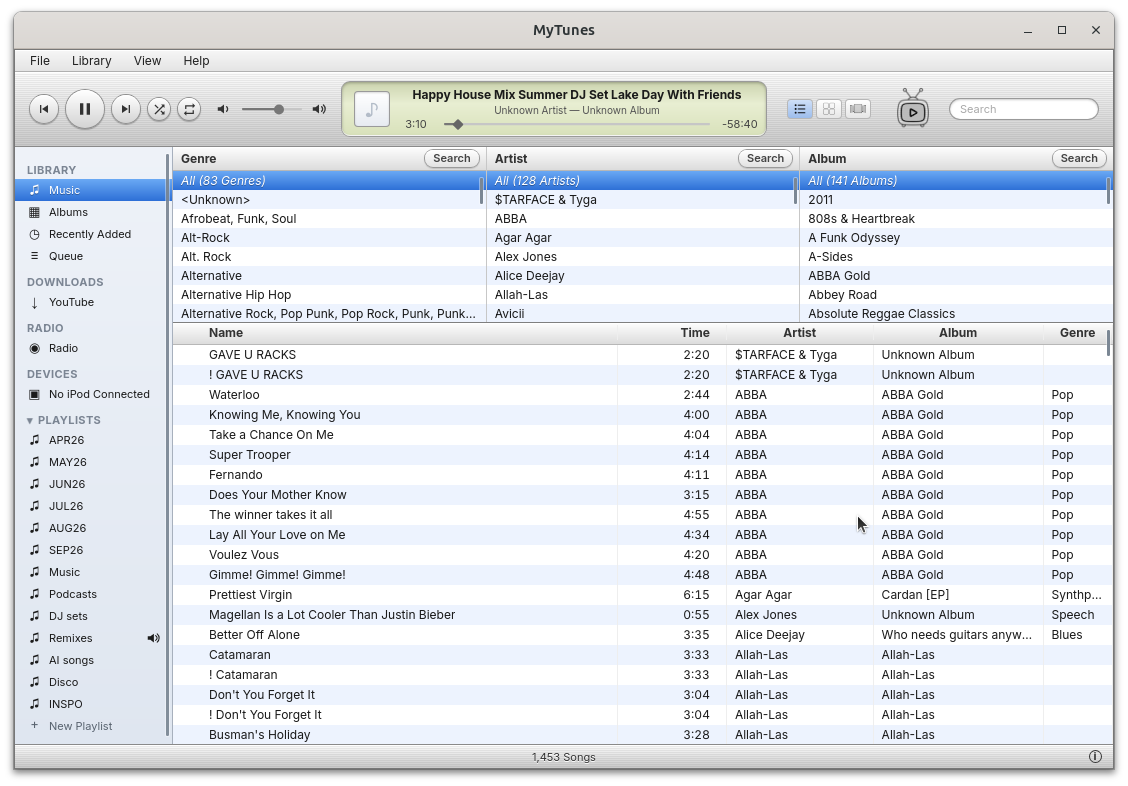
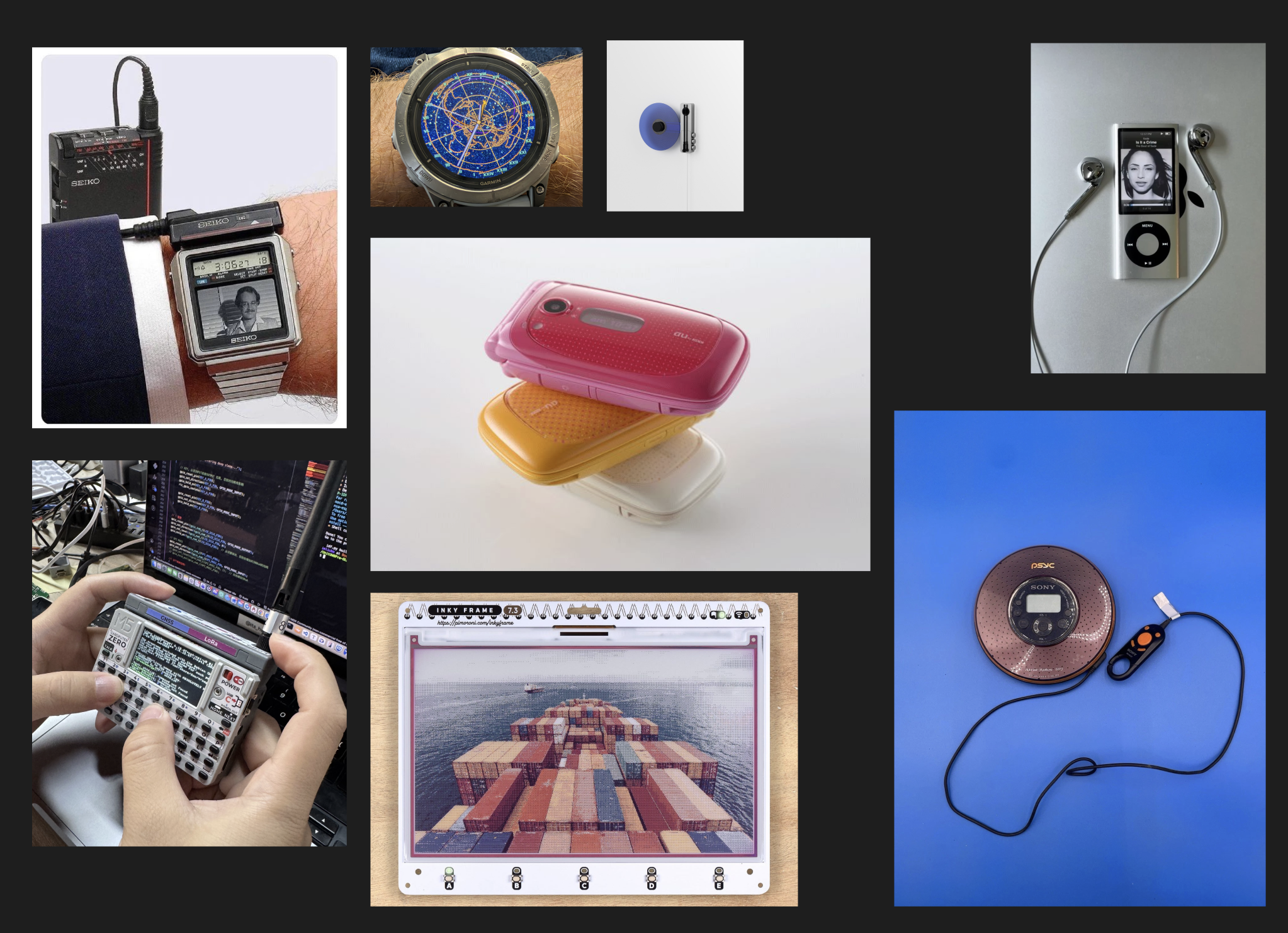
The second thing was a lot of stuff I'm going to group under "making tech nice again". I FOUGHT ENSHITTIFICATION AND I WON! Translation: screw Notion, screw macOS, screw Spotify - I moved to Obsidian + Syncthing, Linux, and iPod Classic + a Linux iTunes clone I built. Why did I do this? I love using my computer. But over time things have gotten worse - every time you open Notion, the interface changes, they deliver popups about new features like junk mail. This is common to Notion, macOS and Spotify - all of them are inboxes for advertising things now. Even car HUDs have ads now. It is not just function - colour and taste is drained too. I miss the colour of OneNote, ironically. And so I spent this year building - I built an iTunes clone that syncs with iPod on Linux! The best one that exists, IMHO. I am looking into manufacturing a new iPod device that is USB-C. I collected 500+ images of colour, inspiration, industrial design, old interfaces under a "nintendo" folder on Arena. I started an offline music collection again! :) And downloaded lots of niche remixes, DJ sets, podcasts, and various media to my computer. And I listened to them! I spent 100% of my gym sessions without a phone. I was never once texting in the gym. My iPod's battery lasts for a week at least. It works EVERY time. It is reliable and consistent. There are never new ads, popups. It is built for enjoying music - exploring the collection - and not for fast-food listicle music listening culture. And I don't spend $1500/yr just maintaining it. And it feels great!
I spent the rest building things with AI, working on my health, and reading a few things from different fields.
Things I achieved!
- Completed a mini biotechnology course at MIT - How To Grow Almost Anything! Proof.
- Diabetic Keto (even harder!) for 67 consecutive days. Full nutritional coverage. Acquired weights, blenders, designed meals.
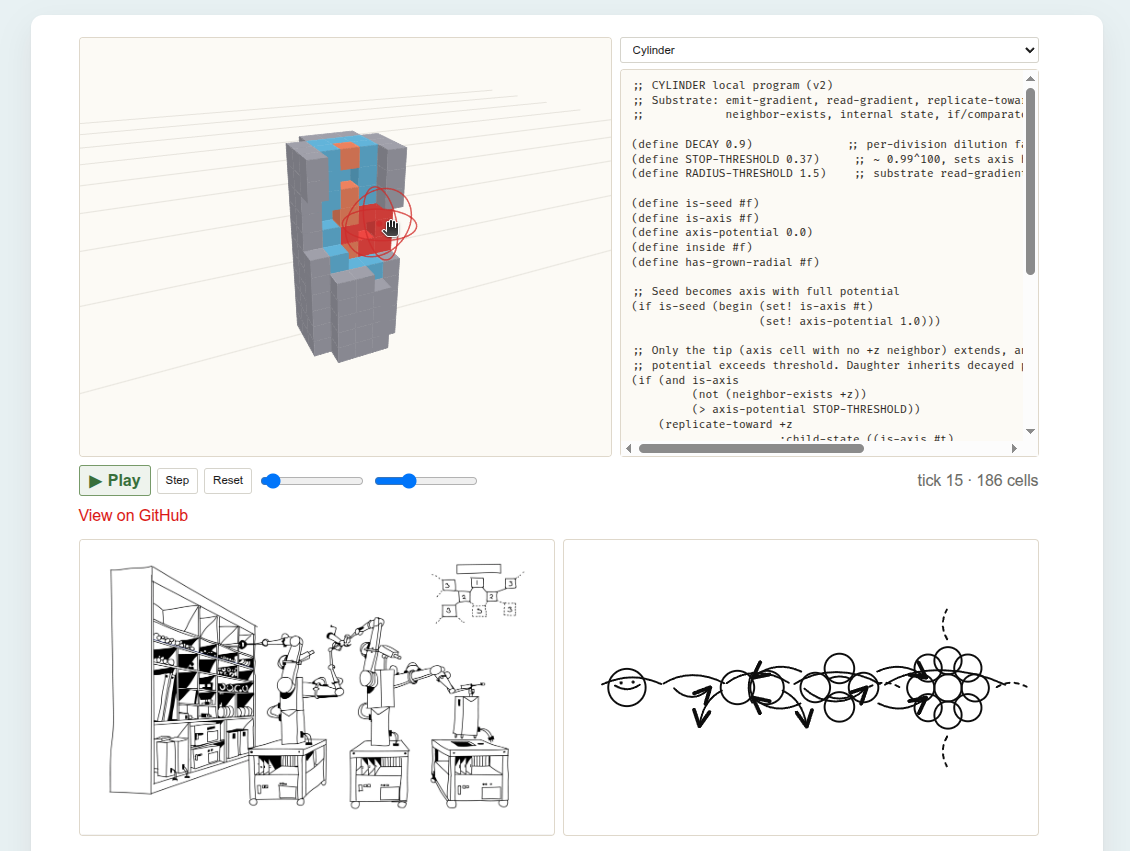
- Generated a cylinder using local-only 3D continuous cell programming, based on a bio-inspired realistic programming model.
- Got Geoffrey Huntley as a presenter at our meetup, nominee Best Talk.
- Collected 1700+ images on Are.na for personal graphic, design, style research.
- Built a fully-fledged replacement for Rails, a new ORM called ProtoSQL, an entire development framework based on Monorepos, Bazel, ProtoBufs, and SQLite.
Things I learned.
- Finance.
- Value investing.
- How buying companies you never sell means you compound faster than companies where you sell and incur tax liability. Simple but I was surprised.
- "No Rush" philosophy. From a friend, Joey.
- We think of doing things quickly as the default standard for excellent. But what if it isn't? You rarely hear "take your time" nowadays.
- Biology:
- How is insulin manufactured? Recombinant synthesis, bacterial inoculation.
- Proteins, compounds.
- Morphogenesis and hormonal signaling.
- Rationality.
- Bayesian thinking. Upon considering my complications from my chronic illness (type 1 diabetes), which have received varying explanations from a number of medical professionals, I learnt about Bayesian thinking to use as a tool in interpreting what was going on. It proved very useful in logically thinking through my situation and giving it language - "this is the hypothesis which explains the data the best" is something I kept repeating to people.
- Inversion. Charlie Munger's philosophy, which can also be understood as a version of the plane with red dots diagram. I used it to write some posts - "how do we fail?" is a great way to begin by talking about your solution, especially when you're ADHD and have a billion things to rant on and struggle for where to start, hehehe.
- Software engineering.
- Bazel and Google-style monorepos.
- gRPC and Protocol Buffers.
- Authentication - Google Zanzibar.
- AI dev.
- Ralph loops.
- Verification loops. ie. writing visual verification, linters, etc.
- Jagged capability of models. What works and what doesn't.
- Style and taste. Where using AI is valuable (the limits of bullshitting with AI), where it definitely is not.
- ADHD.
- How to journal with ADHD - date-based (MM-DD), habitual indexing (i++). I struggled for a long time with coming up with a system that was perfectly organised but didn't require constant refactoring. Many people can maintain wikis. I found that simply making a folder for each day, and titling thinking on the same topic consecutively (ie. Morphology 1, Morphology 2, Morphology 3) was very useful for my associative brain. It feels like a database log.
Decisions I made.
- I chose to move to local-first apps and fight enshittification.
- Music. Cancelled Spotify subscription for first time in 17 years. FIGHT AGAINST ENSHITTIFICATION. Acquired an iPod Classic, moved all music onto it, built a syncing system for Linux.
- Notes. Migrated from Notion to Obsidian. Deployed
notes.liamz.cofor shared notes. - OS. Migrated from macOS primary to Linux primary.
- Files. Migrated from Dropbox to Syncthing + VPS.
- I chose to curate and collate art.
- Download niche YouTube mixes, covers, etc. for archival.
- Collect pictures of art I like.
- I decided Phonescreens are Casinos.
- I decided to Make ChatGPT Hard to Use.
- I used ChatGPT to study biology a lot this year, and the default mode felt like rotting my brain, so I installed a custom prompt to make responses as information-dense and difficult as possible - think textbooks.
- I chose Fast cancellation.
- Cancel + move between services within 1wk of failure. Swapped between Claude, ChatGPT plans more than a few times.
- I chose to Keep a positive and opportunistic mindset re: AI. A.B.P. - Always Be Positive.
- "AI Doomerism" is, at worst, advertising, designed to disempower and sell you.
- I decided Life is to be enjoyed while lived.
Projects that I canned.
- AI prompting language runtime. K8's for LLMs.
- Reason: local models weren't fast enough yet.
- I wrote a bit more on my vision though.
- Linux-based OneNote.
- Reason: turns out I just wanted style as separate to function (notetaking).
- Using AI to write.
- Reason: writing is thinking. AI cannot clarify thoughts for me (yet), and it definitely can't "go to the gym" for me when it comes to thinking.
Opportunities I noticed.
- Biotech.
- Biotech is transitioning from a scientific labour to an engineering discipline. This is my amateur viewpoint but an idea that is being carried by people such as Jen-Hsun Huang and some bio founders I've spoken to. Biology contains a lot of manual labour, tinkering, and unknown unknowns - for example, with operating a bioreactor, technicians tweak and tune until they get good output - but there may not be a clear understanding as to why it is working. Contrast this with an engineering discipline - we understand the primitives and how to layer and compose them to achieve intended designs adhering to specifications.
- Read Synbio25 - the next 25 years of synthetic biology by Keoni Gandall.
- To give a clear example - at the level of artificial organism design, the smallest artificial cell, the JVCI-syn3.0, which consists of 473 genes, we still do not understand the function of ~1/3 of these genes. Only this year, did we get the first full-scale computer simulation model of a cell - a whole-cell spatial and kinetic model for the entire cell cycle - which takes 6 days of compute to simulate 10 minutes of cell division.
- I saw people personally sequencing their genome and analysing the genes with AI. However, there is a way to go for this to be generally useful.
- I saw ~7 different cloud lab startups start up, and Big AI Labs creating wet labs in-house. I noticed local biology startups don't use automation (eg. Opentrons) yet, here in Australia.
- I am watching New Dawn Bio for their work on bioengineering a new type of tree, which they call "cultured wood". I've been a little obsessed with the question - how can we grow trees 100x faster? A tree, after all, is a piece of technology (and one which has not been upgraded in 10,000 years).
- Biotech is transitioning from a scientific labour to an engineering discipline. This is my amateur viewpoint but an idea that is being carried by people such as Jen-Hsun Huang and some bio founders I've spoken to. Biology contains a lot of manual labour, tinkering, and unknown unknowns - for example, with operating a bioreactor, technicians tweak and tune until they get good output - but there may not be a clear understanding as to why it is working. Contrast this with an engineering discipline - we understand the primitives and how to layer and compose them to achieve intended designs adhering to specifications.
- Consumer toys - iPod's, form factors.
- I see a lot of demand (example, example, example, example) for a new iPod-like music player that supports USB-C and is fashionably well-designed.
- Coincidentally, I also notice a lot of demand for electronics that unbundle the smartphone. There is an undercurrent of "I hate my phone but ugh" which is not being served.
- I think people miss the technology of the 2000-2010's, where things were well-designed, ergonomic (had physical controls aside from dynamic UIs - see sports cars), uniform in style (not web apps), that didn't split their attention, had a single purpose, and generally had a substance and taste (think PS2 games) that algorithmically-optimised media seems not to nowadays, which promotes superficiality (shorts, indescriptive YouTube titles, multitasked media ie. Netflix background shows) over substance.
- This is not to say that people want this alone, I think there is a complement of having both that is underserved - both iPod's and Spotify, rather than either/or.
- Subsequently and aside, I see new toys and technologies are resurging - take this tiny eReader for example. And I hypothesise that there is latent demand for fashionable electronics in non-phone form factors (think: pendants, clamshells, portals) that primarily serve as fashion items. And that this is possible, thanks to Chinese manufacturing.
- Robotics.
- Intelligent robots are nearly here. Physical Intelligence has the most impressive demos I've seen, aside from the Chinese robotic olympics routines.
- I am watching Monumental, Tesla's Cybercabs, Comma.ai's blog, Alloy Robotics, Abyss (underwater robots), as well as drone startups - GrazeMate and Halter.
- AI (obviously).
- I noticed a lot of people building "Brains" - Obsidian knowledge vaults, agents which import and process knowledge (podcasts, emails, etc), terminal emulators designed for managing 10's of agents (myself, friends, Superset, Superlogical).
- I noticed a gap for a "firewall" - "The conceptual appeal of the firewall is enabling inter-agent interactions. ie. my wife's brain, and my brain can chat. Or I can have agents talk to other businesses' agents."
- I thought deeply of a longer-form idea called "The Agentic OS", which envisions a few core primitives I see in future - the brain, 24/7 agent-to-agent comms, your threads being short-running tasks like "get groceries" and open-ended threads like "based on everything you know about me, improve my health", agent group chats with your doctor.
- I noticed the emergence of the term "jagged capabilities".
- On scaling software dev with agents, I read:
- Full-stack startups.
- I noticed a pattern of two startups I liked, which invested in "selling <X> from automation", where the data is then used to improve their models.
- Monumental - Selling brick walls, built by robots.
- Genetic Assemblies - Selling DNA, built by robots.
- Arguably, Codex/Claude - Selling code, built by robots.
Health I kept.
- Diabetes.
- Keto diet. Regular eating.
- Arm/legs complications. Healed and corrected diet.
- Shoulder injury.
- Physiotherapy.
- 8mo long nervous system reaction.
- Self-care.
- Sick.
- 1.5wk in Feb.
- 3wk in August.
- Traumatic reaction.
- Therapist.
- Mentality.
- Overcoming learned helplessness from all of these health issues.
Hobbies I enjoyed.
- Watched 4x movies a month and wrote reviews on Letterboxd.
- Digitised the Peep Show and Seinfeld scripts, began literary analysis on commonalities between both shows.
Products I built.
Vertical-tabbed compact native terminal manager with file-based workspace for cross-device sync.
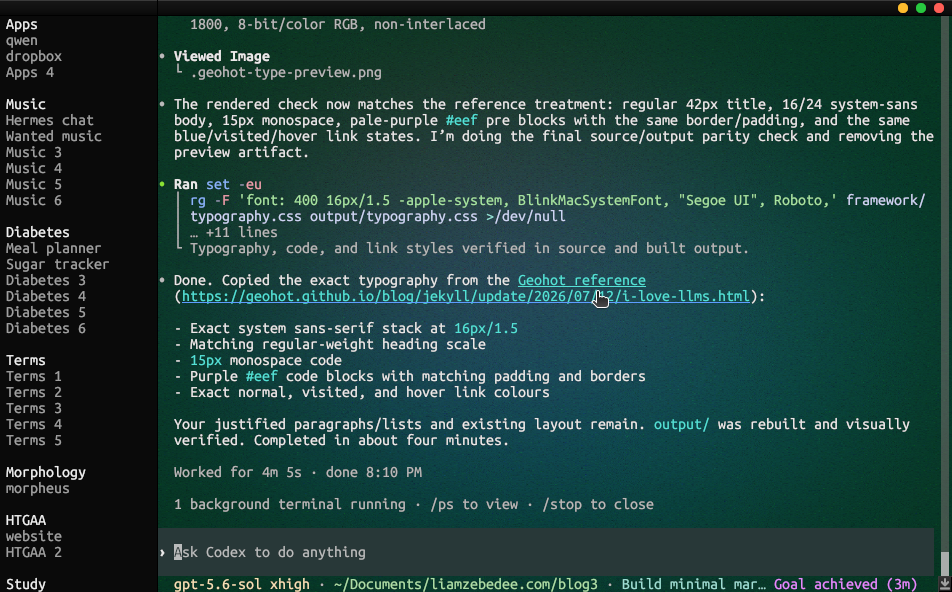
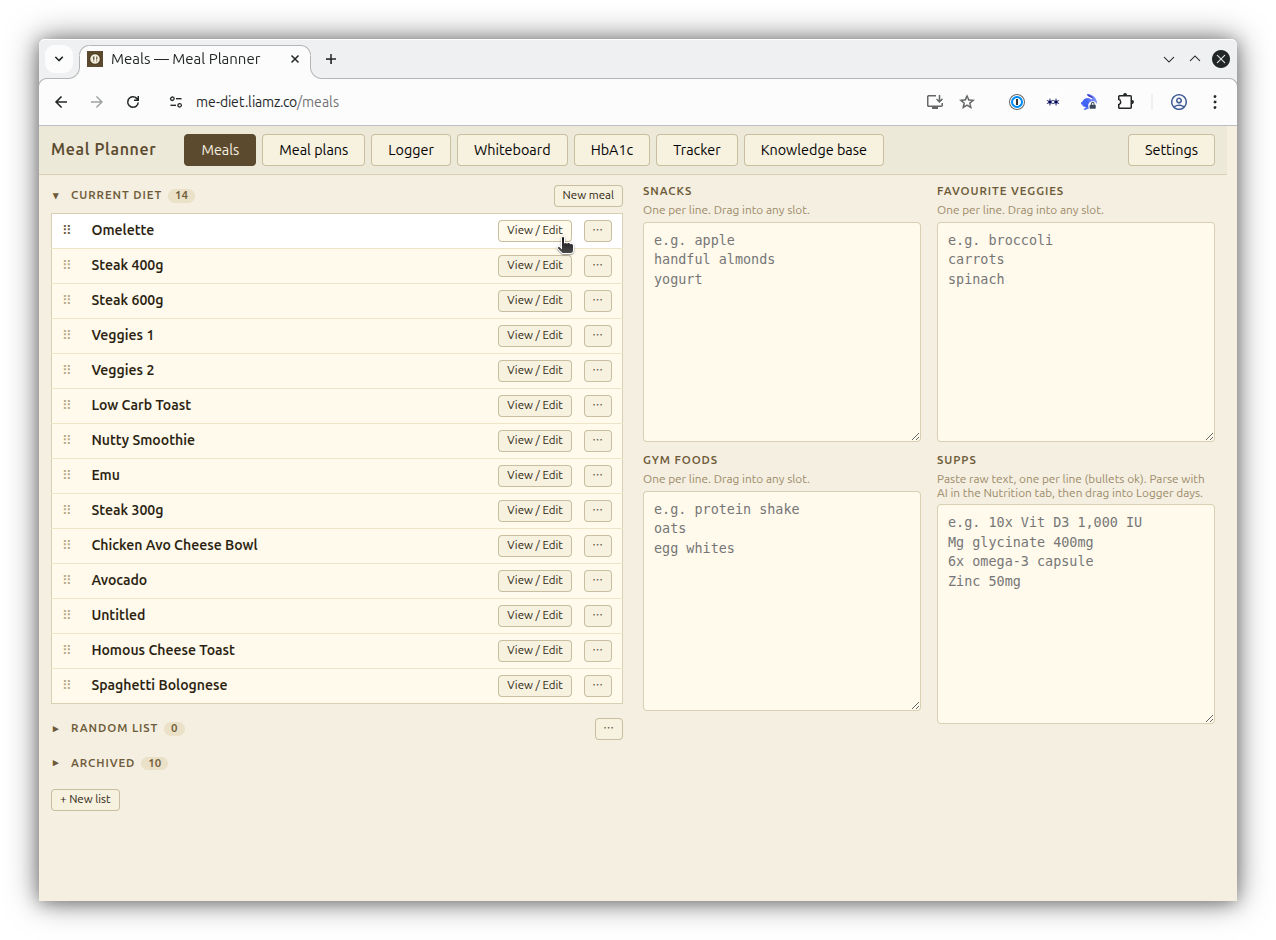
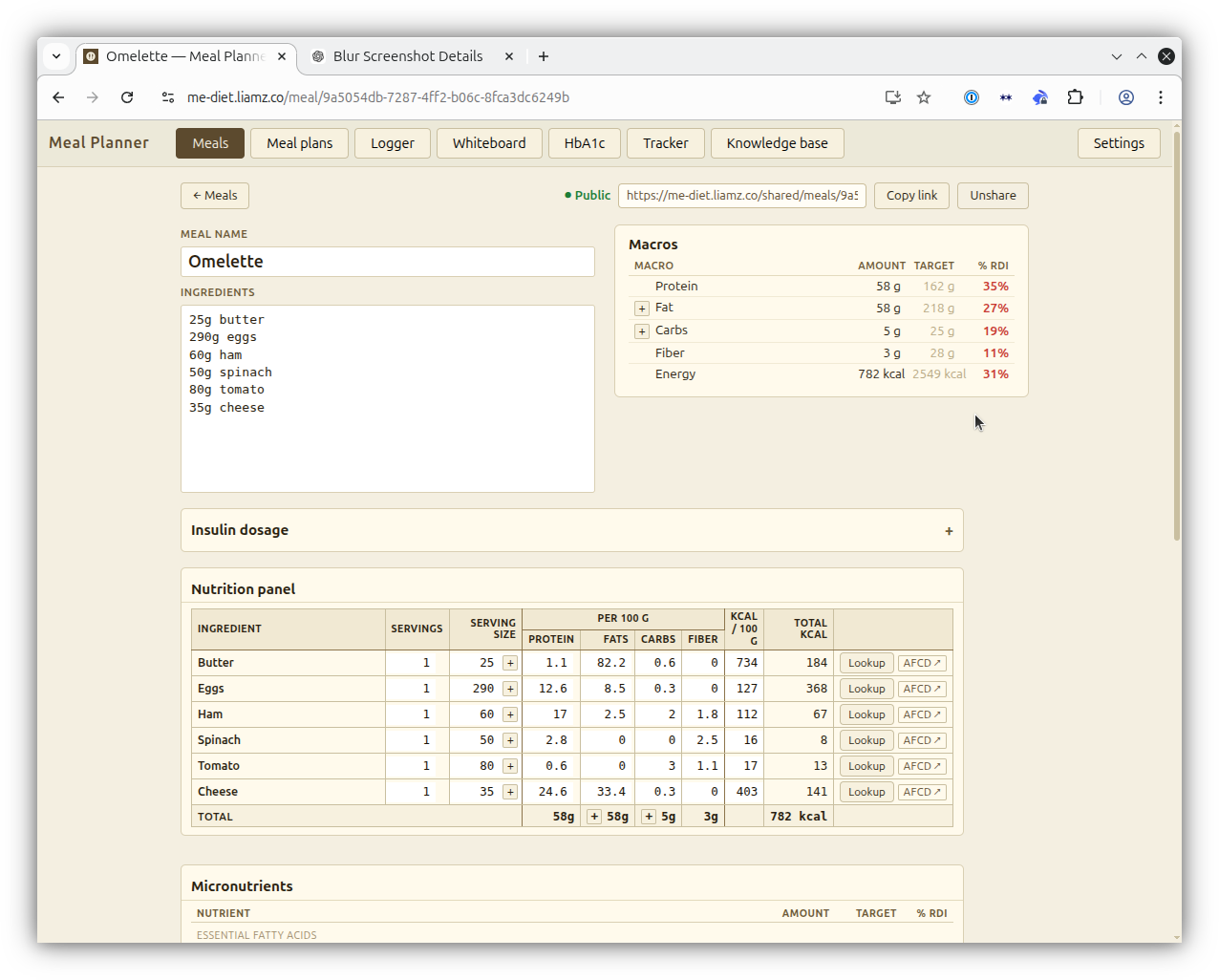
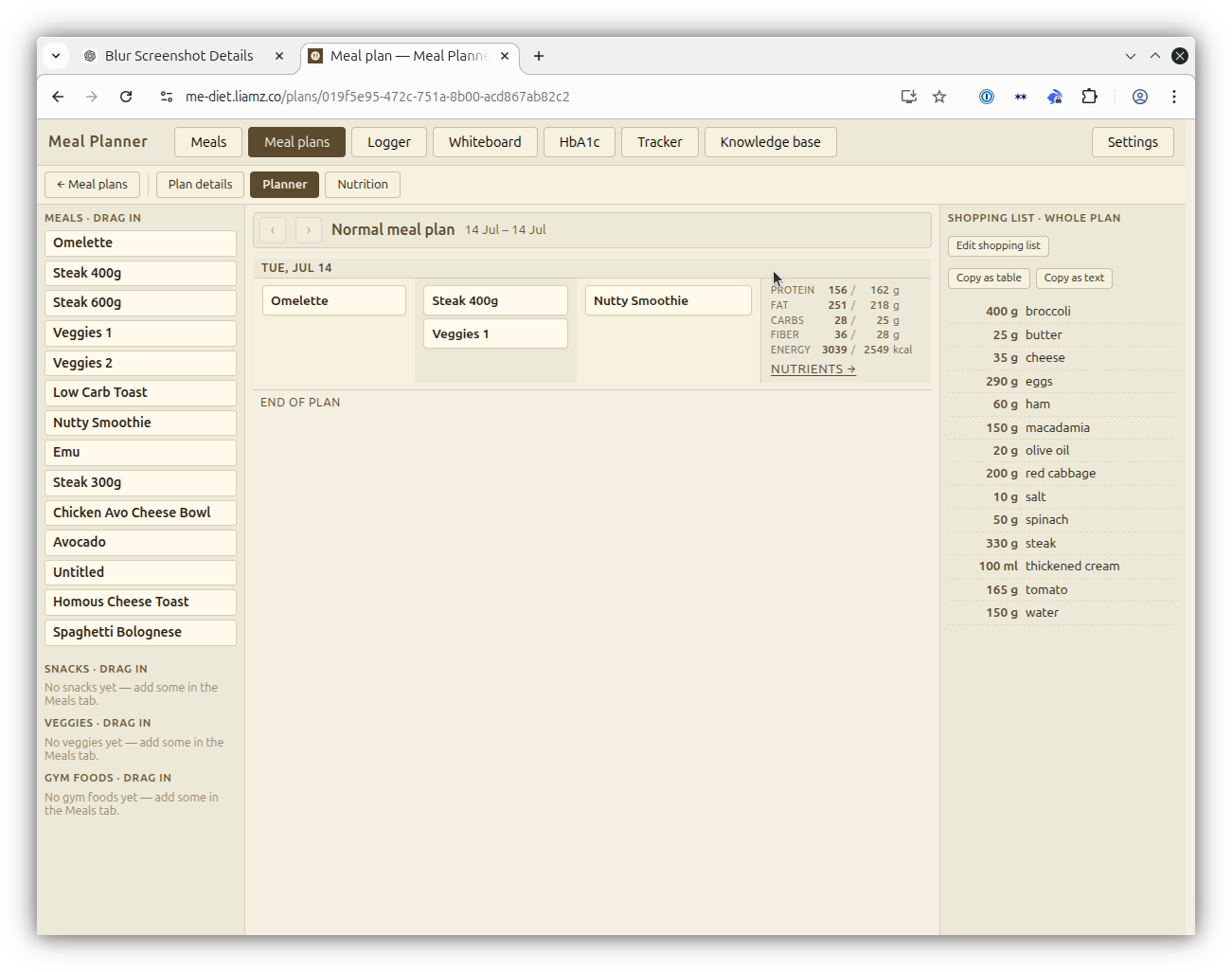
Health manager - meal designer, meal planner, micro/macro calculator, bespoke health metric logger, MCP integration.
Morphogenesis simulator.
Linux/macOS iTunes clone / music manager, with working iPod sync.